Showing posts with label Google trends. Show all posts

Monday, 15 May 2017

A Step-By-Step Guide To Gaining Quality Leads From Social Media


Attaining popularity on social media platforms is an absolute must for businesses these days.
More and more marketers have started seeing social media as an indispensable tool for marketing, as well as lead generation.
How do we know that? Well, the Google trends graph tell us for one.
Social media is essential for brand building and connecting with your target audience. So, if you are just using it for likes, shares and comments, then you are late to the party.
By now, your competitors probably already have a social media marketing strategy.
As Jacquelyn Smith explains in Forbes, “You can really get to know the customers needs through social listening. It’s a great way to research a market and initiate a conversation leading to a sale.”
According to Business 2 community, the share of marketing budgets spent on social media is expected to be more than double over the next five years, from 11% today to 24% by 2020.
Therefore, it’s high time you make proper use of its potential.
In this article, we’ll discuss ways in which you can use channels such as Twitter, LinkedIn, Facebook and Instagram to gain quality leads from social media for your business.

First, let’s talk about what lead generation means in today’s world

The definition of lead generation, according to Google, is “the action or process of identifying and cultivating potential customers for a business’s products or services.”
Therefore it is not simply about selling your product but also gathering information about your customers including their interests, their pain points, their likes or dislikes, and what will make them spend on your product.
Before the internet, marketers used to send direct mail-outs or give away forms in newspapers or magazines to collect information from potential buyers.
Today, social media has made it much easier for marketers to reach their target audience. With almost all of their information already online, all marketers need to focus on is how to maintain the attention of the target audience and convert them into leads.
Enter FacebookTwitterLinkedIn, and Instagram. All four allow you to reach quality leads through video marketing, email opt-ins, or paid ad campaigns.
Here is a step-by-step guide to help you maximize your use of social media marketing.

Facebook

With over 86 billion monthly active usersFacebook is one of the best platforms for marketing as well as sales. Businesses can share links, videos, images and posts on their Facebook pages to reflect their personality and style as well as reach new customers.
Have a look at these example Facebook ads.
Simple, but effective. Plus, there is a lot more you can do to capture the attention of people on Facebook.
For instance, people love contests. They’re fun! They demand engagement!
You have probably come across companies giving away prizes such as a new iPad or a $500 gift voucher. Perhaps you don’t need to be told that the company easily earns the money back through clicks, likes and conversions.
But here’s another angle to consider: people willingly provide their personal details to participate in such contests, which means you have an opportunity to obtain whatever information you are seeking from your target audience and improve your business.
Better yet, contests are a great way of increasing your email database.
Another great way to add value to your Facebook page is to create customised Facebook tabs. The ‘tabs’ feature allows companies to promote something distinctive and unique.
Take, for example, Coca-Cola’s House Rules tab on its Facebook page. Here, the company asks its fans to commend, post or share whatever they feel about the brand.
Also, don’t forget to keep your company’s logo as a big part of your profile or header image so that Facebook users know and remember it.
Always treat your Facebook page like a website and continually add new content. Create a schedule and make sure there is a good mix of photos, videos and compelling posts to generate more traffic.

Twitter

A while back, nobody knew how to track leads through Twitter. However, today most marketers use Twitter for widening their reach and turning their followers into customers.
According to this article in Business 2 community, around 79% of users recommend brands that they follow. A further 85% of users feel more connected to businesses after following them. Tweak your tweets a little and see what effect it has on your profits!
There are a few more quick ways to gain leads on Twitter, including Twitter Cards.
Twitter Cards are a lead generation tool which help in capturing attention as well engaging your audience. They work directly within your promoted tweet to collect users’ contact information in exchange for your offer, and increase your odds of conversion.
Furthermore, they are concise, don’t require much work and are definitely worthwhile. You can post many different types of cards including summary cards, photo cards, gallery cards and more.
Here is an example of an amazing gallery card on Twitter.
Recommended for You
Also, never miss out on your brand mentions. An article in eMarketer reveals that 83% of consumers say online reviews influence their perceptions about companies, and 80% report that negative online comments affect their purchasing decisions.
Therefore, it is crucial that you monitor what people are saying about your business online.
You should respond immediately, or as soon as possible, if someone has mentioned the name of your brand on Twitter.
See how one of the most influential brands on Twitter – JetBlue – respond to some tweets by their customers.
You can also host virtual events or start a campaign on Twitter to further engage your followers and generate leads. It could be anything from having a live discussion on a particular day, to answering questions in a company Q and A.
The trick is not to initiate a conversation directly about your company, but rather the industry that surrounds it.

LinkedIn

LinkedIn has almost limitless power when it comes to generating leads. In my view, LinkedIn is the social media platform to rule them all and the main one that you should focus your energy on.
LinkedIn has more than 400 million members worldwide. You can expand your network by signing up to LinkedIn Premium, which offers a one-month free trial.
Premium gives brands, individuals and companies on LinkedIn a unique opportunity to expand their reach by providing the user with facilities such as sending 15 InMail messages a day to potential leads/clients, seeing who’s viewed your profile in the past 90 days, and finding connections faster with the option of Advanced Search.
Choose a Premium account if you haven’t already to increase your presence on this powerful social media platform, then familiarise yourself with LinkedIn Publishing.
LinkedIn’s publishing platform is a great tool for marketers to share their thoughts as industry experts.
They can also use this platform to post important information or insights that might help job seekers.
Over time, publishing timely and relevant content is a surefire way to generate more leads.
According to Hootsuite’s blog, countless professionals are now using LinkedIn as a blogging tool, and gaining an opportunity to engage a new audience for their business. See an example of how you can post on it below.

Instagram

The last of the social media titans, but not the least!
Instagram is relatively new, yet one of the fastest growing social media channels in today’s digital landscape. In its short life span of just six years, it has amassed over 500 million users.
Can you afford not to reach them? Nope, of course not!
Until recently, people primarily used Instagram for sharing photos, getting likes, and adding followers. However, in 2015, things got a shake-up after Instagram introduced paid advertising.
Using this advertising platform, businesses can now generate leads by holding quizzes, training or just sharing a photo of their brand. Plus, it’s super easy to connect your Instagram account up with your Facebook and Twitter accounts to cross-promote content.
Certain companies such as Mercedes Benz are brilliant at integrating their Instagram content on Facebook. Take a look at this example.
Once again, it’s simple but effective marketing. On that note, always remember to respond to comments on your Instagram posts!
While it’s cool to get thousands of likes and shares on a photo, it’s equally important to keep a tab on the comments people leave for you.
You don’t have to have long conversations… but if someone comments on your post or tags your brand, respond to them. This will help you expand your community and build relationships.
See a great example of how to keep communications short but sweet below.
One of the other major benefits to using Instagram is its video sharing feature. This provides a unique opportunity for marketers to share brief video clips about their products or services.
Videos are an engaging, interesting and informative way of communicating with your target audience as well as a neat way to showcase the benefits of your offering in under two minutes.
Lastly, be sure to use relevant #hashtags with everything you post.
Hashtags are the hallmark of Instagram. Finding leads isn’t easy in such a large community so adding popular or distinctive hashtags to your photos will help you find leads in a more organized way.
For instance, if you’re offering matrimonial services, you could post photos along with hashtags like #matchmaking or #findtheone to reach a larger audience seeking help in this regard.
You could also create a brand-specific hashtag for a contest or promotion. For instance, Dry Soda used the hashtag #fridayDRYday to distinguish their post.
Also, see the general use of a hashtag below by a coffee shop owner.

Wrapping up

The list of how to connect with your potential leads on social media platforms is endless. These are just a few pointers on how you can use social media to generate leads, and most of them can even be used across each platform!
Social media is integral to raising awareness of your brand and generating more leads for you. It is woven into almost every nook and cranny of our personal and business lives so use it to amplify your content creations as people discover and share them.

Thursday, 13 April 2017

10 Content Marketing Tools That Will Improve Your Efficiency


DID you know that 60% of marketers create at least one piece of content each and every day? Furthermore, those who adopt content marketing have 6x higher conversion rates than others who don’t!
There is no question that content marketing is effective and it’s growing in popularity, but it also demands time and effort.

There is a little secret, however, that the most successful content marketers don’t want everyone else to know…Content marketing tools can take a lot of the work out of the process of content creation while maximising productivity.
In this post, we’ll show you 10 amazing content marketing tools that industry experts are using to simplify the content creation process.
Let’s dig in…

1. Trello – Project Organizing Tool

When creating content, staying organised is of the utmost importance. You need to know who is in charge of what, when things are due, and what all is going on. Trello is a tool (essentially built to be used by teams, but great for individuals too) that’ll help you keep your work organised. Groups of users can join together in this one place to collaborate and stay on the same page (literally and figuratively). No more searching through email threads to piece together your content campaigns.

You can create “boards”, each with their own “cards” as shown above, to organise projects. Also, add members to work on tasks as needed and move cards between boards to keep up to date with what’s been done and what items are still due. An added bonus about Trello is it’s free.

2. Feedly – RSS Feed Tool

If you’re looking for hot topics that’ll help you come up with ideas for a piece, the best place to look is at what’s being published on popular blogs in your niche. Visiting each blog one by one is an enormous time vacuum. Enter here Feedly.

Feedly is a super easy place to search for industry leaders in specific niches, add them to your feed, and then stay up to date on what they are posting. The interface organises them all in one neat place for easy browsing. What you can do manually in an hour, Feedly can do in just a matter of seconds. Do you feel your day getting freed up already?

3. MozBar – Domain and Page Authority Stats Tool

MozBar is a toolbar you add as an extension in your browser that allows you to measure domain and page authority along with social sharing stats. Once installed, your Google search results will look like the screenshot below.

If you click on link analysis, a new tab opens which gives you a wealth of information about that search result. See below.

This allows you to research your competition very easily and in depth in terms of domain/page authority and backlink data. If you’re keen on exploring niche competitiveness in search results, there’s also a button available with the premium subscription that lets you get keyword difficulty.

4. Easel.ly – Image Creation Tool

It’s no secret that traffic and conversions get a boost when visual content is integrated with the text, but creating images, videos, and infographics can be time intensive, hard to make to a professional standard, and expensive to continuously hire out. This is why I love Easel.ly. With templates like this one below, you can simply input the text you have in the graphic and you are good to go.

Seriously, anyone can make awesome looking infographics in just a few minutes. If you want more templates and variables to choose from, you can upgrade from the free version to the premium option.

5. Grammarly – Proofreading Tool

The biggest turn off for someone reading your content is annoying grammar and spelling mistakes. However, it can be hard to catch every little one yourself. That is where professionals use a tool like Grammarly. You can download Grammarly and integrate it into Microsoft Word and your internet browser. It will automatically scan your documents, show your errors, and offer suggestions to fix them.

You can also upgrade to a paid version to get a more in-depth analysis of your writing. A bonus is that Grammarly analyzes the corrections it suggests to your documents each month and sends you a summary which can help you improve your writing skills.

6. TrendSpottr – Trend Spotting Tool

How do you gain attention and engagement? Create and share content on a trending topic before the competitors catch up with the hype. However, spotting a trend isn’t always easy (even for experts), but with TrendSpottr, it becomes virtually effortless.

You simply log in and search for the general term you are interested in using the search bar at the top of the page. Then, you will get results like these that show you top trending specific terms on the left, along with recent posts on that topic in the middle column. You can also look at the sentiment the term is receiving, the momentum it’s gaining or losing, and compare your search term to another term to gauge trending strength. This is very cool and allows you to write about what people care about most at the moment.

7. Buffer – Social Media Management Tool

In order to see real results on that great content you’re creating, you need to effectively promote and manage it on social media. But, you don’t want to do this manually because it’s truly like a full-time job in itself. This is where Buffer is the perfect tool because you can connect your social media accounts (like Facebook, Twitter, and LinkedIn etc.) and automate posting to them.

The page you see above is where you schedule your posts on Buffer so you can create a consistent stream of content for your followers. This helps to keep them engaged and grows your follower base without missing a beat. The content tab on the left is where you add in the posts you would like to be scheduled and then, of course, you can monitor performance with the analytics tab. This is a huge key to saving time and taking a few steps closer to content marketing success.

8. Buzz Sumo – Industry Listening Tool

Buzz Sumo is a resource that listens to what is going on in various industries. It is another tool that is helpful for spotting trends. You simply type in the topic you are interested in and you can see which content is most shared and trending. You can also analyse the content, compare domains, and see top authors. Easily view how many shares each piece of content has received on various social media platforms, as well as the backlinks each piece of content has.

This can help when researching topics to write or share and also to locate influencers in your desired industry.

9. Check My Links – Link Auditing Tool

Broken links on your website hurt your SEO and the experience of your users. You don’t want to risk losing a visitor because your link is a dead end, so it is important to ensure that your cited resources deliver valuable and contextual additions to the content on your page. Check My List is a very simple extension to your browser toolbar which will check any page for broken links. Easily identify and fix them, without using up hardly any time.

10. SEMrush – Competitor Research Tool

Last but not least we have SEMrush. In order to ensure that you’re creating and marketing content that’s going to do well, you’ll need to know what the competition is putting out there (yes, you need to do a little spy work).

SEMrush is one of the best tools for this purpose. If you want to find out what keywords the readers and researchers use to find a specific website online, SEMrush will pinpoint that data. The tool tracks and analyses rankings, competitors, links, keywords and PPC ad spending for any domain you need info on. Plus, the dashboard is really nice and easy to understand.

Industry Experts Agree

There you have 10 of the best content marketing tools to help boost efficiency and save your precious time. We all want to be successful, but also want to have time to enjoy off. Not only do these help you do that, but they can significantly increase how effective your content is at the same time. Don’t just take it from me, see what other content marketing experts are saying about these tools:
TopTenReviews named Grammarly the “The best overall online grammar checker; it offers thorough and accurate tools, features and explanations of grammar rules. You can’t go wrong with this online service.”
Gael Breton from Authority Hacker says “Who doesn’t want to know what their competitors rank for?” He says SEMRush is his #1 way of finding keywords.
Adam Connell of bloggingwizard.com says Buzz Sumo is one of his favourite tools. He says the following “Not your usual keyword research tool and well, it’s not. Keyword research has been a foundation of content planning for a good while and it’s about more than specific keywords, it’s about topical reliance and intent. I use BuzzSumo to validate my keyword research and get an idea of how much certain topics get shared.”
Are there any other tools that we missed? Help us out by sharing your favourites!
Or, perhaps you need a bit more help in the content management area? This 2-in-1 spy tool for Facebook Advertising helps expedite your content creation and eliminate the guesswork of creating relevant ads for your target audience. Check out Adsviser today!

Wednesday, 15 March 2017

18 Proven Ways to Increase Content Engagement on Your Blog


Creating a perfectly engaging blog can be a real challenge. You have to contend with billion bytes of information and the short attention spans of readers. Crafting something your audience will enjoy and want more of may seem like trying to be heard in the back row of a rock concert. But there are ways to stand out above the rest.
Use the proven guidelines below to increase content engagement on your blog and build a powerful reader base.

1. Know Who You Are Writing for and How You Can Help Them

Knowing your target audience is critical for engagement. Your blog has to serve a purpose to your readers. So provide information that can help them solve their problems.
The best way to get to know your audience is by creating a marketing persona. This tool allows you to see your readers’:
  • Values
  • Who they are
  • Where they work
  • Their interests
  • Other demographic information.
Knowing these facts lets you write in response to their needs.
For example, TechCrunch posts on all things technology to attract the attention of those in the startup technology space.
Here’s how to create a great persona:
  • Learn from these examples beforehand.
  • Use software such as Google Analytics or Clicky to get basic information.
  • Build several profiles of your average readers. Include what their needs are and how they access information (mobile or not).

2. Create a User Experience Readers Will Want to Come Back to

Your audience will only engage with your content because it is helpful to them. Part of that is because they had a good experience on your blog. In turn, UX, or User Experience, is a huge factor in making actionable content.
According to UX consultant Jozef Toth, 88% of online consumers are less likely to return to a site after a bad experience. What makes for a bad experience?
  • Having to scroll incessantly
  • Showing content which has little relevance to the reader
But a great user experience means readers will stay on your blog longer and will keep coming back.
Try these tips for enhancing your page’s UX:
  • Replace ads which aren’t helping your website traffic or supplying you revenue.
  • Make your blog more aesthetically pleasing (poor visuals can contribute to poor UX).
  • Make the purpose of your blog clear.

3. Create Content So People Will Want to Share It

Of course, great content is the heart and soul of your blog, but what defines quality content?
Your blog should offer unique insight into the issue it addresses or the problem it solves. Your goal should be to become the authority on your topic.
Here are some key characteristics your writing should have, as explained by Kissmetrics:
  • Write something unique.
  • Make your content actionable (i.e. compel them to do something about what they’ve read).
  • Offer the best answers to questions.
  • Be accurate in your information and statistics.
  • Tell a good story and leave readers asking questions.
  • Be concise.
  • Always update your content.

4. Craft Magnetic Headlines

It is not possible to understate the importance of headlines — they make or break your blog. Consider headlines that draw readers into your content. With so much information available, competition for your audience’s attention is fierce. Mashable does a great job of creating great headlines.
captivating headlines
Studies show two important headline factors:
  • 80% of readers never make it past the headline to your content
  • Traffic can fluctuate as much as 500% based on the headlines you use
Make the most of your headlines with a few well-honed techniques. Techniques that allow you to create intrigue and draw in your readers. You also need to ensure your article delivers on what the headlines promise.
Marketing experts Neil Patel and Joseph Putnam have helped simplify the techniques. They have broken the techniques down into a few simple guidelines called the Four U’s:
  • Make your headline unique.
  • Make your headline ultra-specific.
  • Make your headline convey a sense of urgency.
  • Make your headline useful.

5. Craft Intriguing Introductions

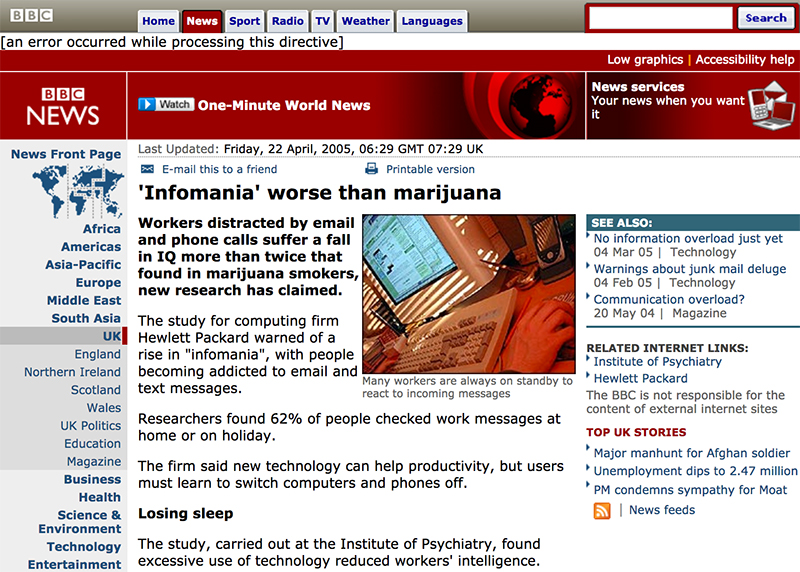
Few people make it past the headline (only 20%). So every word of your introduction must compel your audience to read further. Your introduction should have a great hook which draws in readers. Consider this article from the BBC, for example:
craft intriguing introductions
Your writing must convince readers that it is worth their time to read on. There are many methods you can use. For example, blogger Julie Neidlinger offers excellent advice on this front:
  • Begin with a fascinating fact that isn’t well-known or often-used in your niche.
  • Tell the end of the story in a way that compels readers to ask why.
  • Use a short anecdote. Neidlinger’s example is fantastic — “I once wrote a newspaper story that killed a man.”
  • Ask a question worth knowing the answer to.
  • Write a cliffhanger, like one of Robert Bruce’s unusually short stories.
  • Gently confront.

6. Go Beyond Words

You know your content should inform readers by:
  • Answering their questions
  • Solving their problems
But, chances are that they’re most likely paying more attention to the visuals on your page.
This should be no surprise. Consider this:
  • 90% of the information your brain processes is visual.
  • The fact that 40% of people will respond better to visuals than words.
So you see, the importance of visual media can’t be understated.
The Guardian is an example of a site that makes great use of visual media:
guardian site
Visual content can take many different forms:
  • The aesthetic appeal and format of your blog.
  • An opening image that encapsulates the headline.
  • Pictures which support content headings.
  • Statistics supported with bar graphs and charts to help readers understand complicated information.
  • Videos that add knowledge or humour (and keep viewers on your page 100% longer).

7. Mention Experts and Influencers in Your Content

Gaining credibility with your readers is important. Especially if you are trying to become an expert in your niche. According to one Traackr study, only 3% of people produce 90% of the impact online. Enter influencer marketing.
Influencer marketing taps into the power of that 3%.
How?
By using their prowess and status as experts and contributors. This lends credibility and legitimacy to your marketing efforts. In other words, it will make your content more valuable. It functions like the blurb or foreword from a bestselling author for a fledgeling book.
Forbes does a great job of mentioning experts and leveraging influencers. This post is an example.
Hubspot mentions some great ways to use experts and influencers to your advantage:
  • Mention their Twitter handle. They may retweet you.
  • Include them in a list of experts. Appeal to their egos.
  • Ask them to contribute. They may do a guest post.
  • Quote them. This adds credibility.
  • Get them to attend an AMA (Ask Me Anything).
  • Show them a beta of your content and have them share a testimonial.

8. Write About Newsworthy Topics and Emerging Trends

Staying on the cutting edge of emerging trends isn’t always easy. But it’s the best way to ensure your readers will keep coming back for more.
Sites like Upworthy and Gizmodo understand this and utilise this on their sites.
Knowing the best resources for newsworthy topics will be your key to staying on top. Here are a few great ones:
  • Buzzsumo: This site allows you to analyse what content performs best, for any topic.
  • Quora: Much like Yahoo Answers, Quora lets you see all trending questions out there in any category.
  • Google Trends: This Google tool lets you analyse all sorts of popular trends with data to back it up.

9. Publish Content as Often as Your Audience Can Consume It

Wait too long to post, and your audience gets bored. Post too often and your audience doesn’t have time to take it all in and traffic and comments on each post drop. You’ll have to find a balance for what works in your niche.
Lifehacker, for example, publishes a few posts a day while Backlinko publishes a post once a month.
Here are a few tips as suggested by blogger George Stenitzer:
  • Make and keep appointments with your readers.
  • Find a good rhythm and sustain it.
  • Use all the analytics you can.

10. Offer a Lead Magnet or Content Upgrade for Free

It is difficult to get readers to share their email or contact information with you. To do so you need to entice them with an offer they can’t refuse. This offer is known as a lead magnet or free content upgrade.
If you’ve used the internet for longer than two days, then you’ve seen your fair share of lead magnets.

The lead magnet available on this-this post on Easil is an example.
The advantage in using lead magnets lies in being able to:
  • Build relationships with your audience
  • Growing your email list
The larger your email list becomes, the easier it will be for you to promote any new content that you publish.
The following are a few popular examples of lead magnets:
  • Use a lead capture tool.
  • Offer a free trial of your service or product.
  • Create a video series that will have readers coming back for more.

11. Ask

If you want a more interactive blog, ask questions from your readers. It’s as simple as saying, “Hey guys, we at (your blog/business) value your input. Please feel free to share any thoughts or comments you have with us.”
Sonia Simone from Copyblogger does something similar in this post.
Tailor your reader engagement approach to suit your style and personality. But, by no means be afraid of sounding desperate by doing so.
The following are a few ways to ask questions or ask for engagement:
  • Have you published a recipe or instructions on how to make something? If so, ask your readers to share pictures of their completed meal or project with you.
  • Have you published a blog on a controversial matter? If so, ask your readers to weigh in on the subject.
  • At the end of each blog, you can ask your readers to comment on what they would like to read from you next.

12. Respond to Comments

One of the best ways to encourage reader engagement is to respond to your readers. You may choose to respond to your reader’s emails, but it is also important to respond to your readers’ comments. Check this resource on Blog Marketing Academy on how to respond to blog comments.
Readers who see that the writer engages and responds are more likely to engage more. This helps build a loyal readership.
Why?
Because it lets your audience know that they are being heard and valued.
Here are some tips to responding to comments:
  • Always maintain a professional and friendly voice.
  • Take the time to respond to most, if not all, of your blog’s comments.
  • Never ignore frequent commenters, even if you find them irritating.

13. Comment on Other Blogs in Your Industry

It is also important to interact with other blogs in your industry. This way you get to remain relevant and to build up your reputation with those audiences. The only way you or your site will start to get noticed is if you engage with others on the internet like I did on this post:
comment on other blogs
Commenting on other blogs may help promote those websites. But it will also help you to build meaningful relationships and to network. The writers of the content you engage with may even return the favour.
Here are a few ways to get the most out of commenting on other blogs:
  • Comment on blogs that bring you the most value.
  • Engage the writer in your comments, along with other commenters.
  • Reference your own content in the comments when it is related to the bloggers’ content.

14. Build Your Online Presence

Promoting your name and brand is as important as promoting your content. The more weight your name carries, the more weight your content will have as well. Readers like to frequent content that is written by a name they recognise or know well.
Take this post for example. Sue Anne Dunlevi provides a list of bloggers using Twitter to engage their audience.
Every prominent writer has had to start with little or no audience. They built their audience by engaging their initial readers and other relevant communities.
Follow these tips to build your presence:
  • Join social media platforms relevant to your audience and become active on them.
  • Engage audiences similar to yours on social media.
  • Follow and interact with leaders in your industry.

15. Contribute to Other Blogs Which Have a Similar Engaged Audience

A great way to build and promote your website’s readership is by contributing to other blogs. Especially blogs with a similarly engaged audience as yours. It can be difficult to build a reputation for yourself when you only write for yourself. You can get around this by guest writing content that is like your own.
You may have noticed that many websites feature a variety of writers. Many of them are featured as guest contributors. These websites stand to gain from talented guest writers. How?
  • By adding their expertise
  • Adding depth to their content
  • Building authority and their audience
Start your way to guest writing by following these tips:
  • Become an expert in your field.
  • Build credibility for yourself.
  • Look for blogs relevant to your expertise.
  • Search for sites that feature guest writers or bloggers and offer them your talents.

16. Promote Your Content

There is a lot of competition for content views on the internet. One of the best ways to compete with hordes of other content producers is to promote your content. There are various ways to do this, but the approach may vary based on the site and brand.
Great content without good content marketing is pointless. There are a plethora of resources that provide information on how to market your content.
Use the following ways to get started with promoting your content:
  • Follow industry leaders that are relevant to the content you publish.
  • Feature credible leaders in your content, and then share it with them.
  • Use the proven techniques we have covered in this post.

17. Back Up Your Content With Data

There is a lot of information floating around on the internet, and unless it is linked to credible sources or backed up by data, it isn’t worth a dime. Having credible content is essential to building a large following of readers.
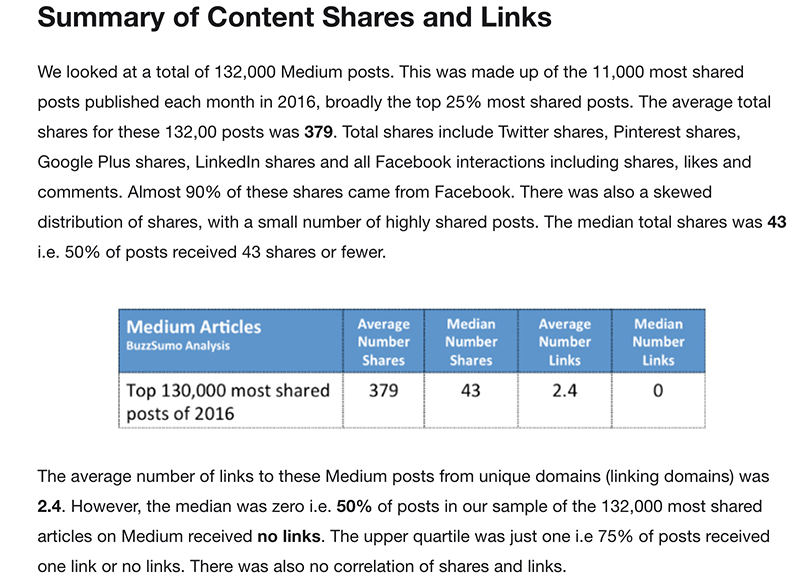
Buzzsumo did this in a post where they looked at what content gained traction on Medium.
content engagement - backed with data
To build credibility, publish content that is supported by reputable sources or data. Your audience should have confidence in the veracity of your website’s content. They are then likely to share it with others or take the information to heart.
Follow these steps to start building content credibility:
  • Always cite your sources. Publish content with at least a few hyperlinks that support your claims.
  • Acknowledge and correct any mistakes or misinformation in your published content.
  • Don’t write misleading titles. Credible content sums up what a viewer will read in the title.

18. Include Something in Your Content That Others Haven’t

What will set you apart is having original content that readers can’t find elsewhere. This will need some thoughtful, research-intensive work on your part. But the payoff will make it worth your time.
According to Zach Bulygo, Google penalises websites that offer duplicate content. They also reward high quality, original content.
So in your website’s best interest put in a little extra work to produce content that your audience will value. Content that will not only boost your site’s rankings but attract more readers as well.
Here are some tips for writing original content:
  • Don’t outsource your content to be written. Do it yourself.
  • Don’t write about something that everyone else has unless you have a new angle.
  • Write content that provides actionable advice or information for your readers.
  • Provide sources for all your content to build credibility and confidence.
The Onion is an example of a blog that always publishes completely original articles.

How About You?

Creating content that will turn your blog into a success is easier said than done. It takes a lot of time and hard work to produce quality content. But this is the main ingredient to a successful website.
There is no one recipe for success. No website that engages their audience uses a one-size-fits-all approach. Instead, use the data-driven tips in this post. They’ll get on the right path to creating a successful blog with great content.